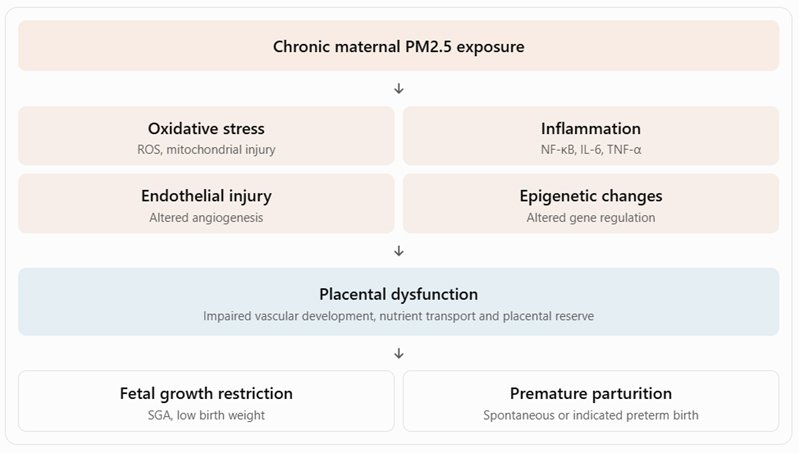
Prolonged exposure to high levels of ambient air pollution, particularly fine particulate matter (PM2.5; aerodynamic diameter ≤2.5 µm), is increasingly recognised as an important environmental risk factor for adverse pregnancy outcomes.
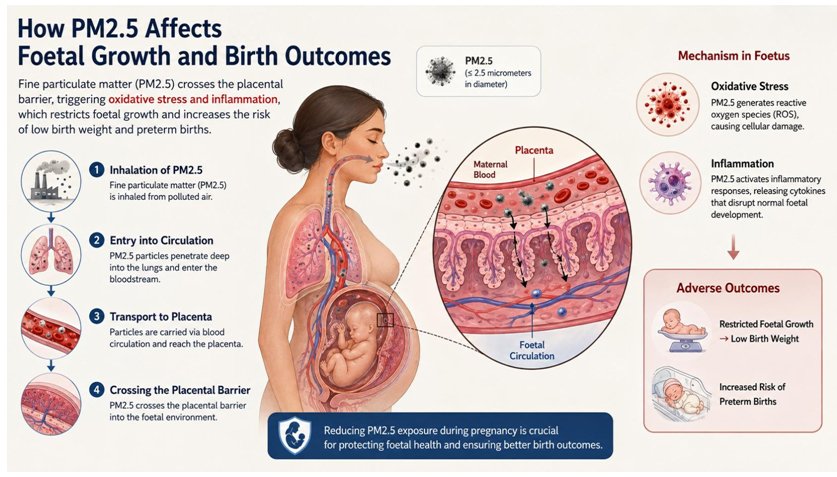
PM2.5 particles are sufficiently small to penetrate deep into the maternal respiratory tract, particularly the alveoli.
The principal mechanisms are:
1. Pulmonary inflammation: Particles generate oxidative stress and activate inflammatory pathways in the lungs.
2. Systemic circulation: Inflammatory mediators and some particle-associated constituents enter maternal circulation.
3. Placental exposure: The placenta is exposed to circulating particles, metals, organic compounds and inflammatory mediators. Some studies have identified particulate-associated material in placental tissue.
4. Fetal effects: Placental dysfunction, altered vascular development and inflammatory signalling can interfere with fetal growth and development.
A. Oxidative stress and placental mitochondrial dysfunction
PM2.5 exposure increases the generation of reactive oxygen species (ROS), resulting in oxidative stress.
At the placental level, this can cause:
• Lipid peroxidation and damage to cellular membranes.
• Oxidative DNA damage in trophoblasts.
• Mitochondrial dysfunction and reduced ATP production.
• Impaired trophoblast proliferation and differentiation.
• Altered placental hormone production and nutrient transport.
B. Placental inflammation
PM2.5 activates inflammatory signalling pathways, particularly:
• NF-κB activation.
• Increased IL-6 and IL-1β.
• Increased TNF-α.
• Increased inflammatory mediators and chemokines.
This can create a chronic low-grade inflammatory environment at the maternal-fetal interface.
C. Impaired placental angiogenesis and uteroplacental circulation
Oxidative stress and endothelial dysfunction may interfere with normal placental vascular development.
Potential mechanisms include:
• Altered VEGF and PlGF signalling.
• Impaired endothelial nitric oxide availability.
• Increased vascular resistance.
• Abnormal spiral artery remodelling.
• Reduced efficiency of maternal-fetal oxygen and nutrient exchange.
D. Epigenetic modifications
One particularly interesting area is the effect of air pollution on placental and fetal gene regulation.
Studies have reported changes in:
• Global DNA methylation.
• H19 and other imprinted gene regulation.
• HSD11B2 methylation, potentially affecting placental glucocorticoid metabolism.
• Mitochondrial DNA content.
• MicroRNA expression.
1. Inflammation-induced premature activation of labour - These processes can promote cervical ripening, membrane weakening and uterine contractions, resulting in spontaneous preterm labour or PPROM.
2. Placental vascular dysfunction
3. Oxidative stress and premature placental ageing
4. Maternal cardiovascular and respiratory effects
Potential consequences for the developing fetus?
| Fetal Outcome | Proposed Mechanism |
|---|---|
| Fetal Growth Restriction (FGR) | Placental oxidative stress, vascular dysfunction and impaired nutrient transfer |
| Low Birth Weight | Reduced placental efficiency and impaired fetal growth |
| Preterm Birth | Inflammatory activation of prostaglandins, cervical ripening and myometrial contractions |
| Altered Fetal Cardiovascular Function | Maternal hypoxia, vascular dysfunction and altered placental perfusion |
| Neurodevelopmental Effects | Oxidative stress, neuroinflammation and altered neurodevelopmental programming |
| Increased Respiratory Morbidity | Prematurity and possible effects of prenatal pollutant exposure on developing lungs |
| Stillbirth | Potential contribution from placental dysfunction, FGR and hypertensive complications |
Which trimester is most vulnerable?
| Pregnancy Period | Potential Effects |
|---|---|
| First Trimester | Implantation, trophoblast differentiation, placentation and early vascular development |
| Second Trimester | Placental vascular development, fetal organ development and fetal growth |
| Third Trimester | Fetal weight gain, placental reserve, inflammatory activation and timing of delivery |
| Entire Pregnancy | Cumulative oxidative stress, inflammation and placental dysfunction |
What can be done to reduce fetal exposure?c
1. HEPA air purifier: Use an appropriately sized true-HEPA purifier in the bedroom and main living area.
2. N95/FFP2 mask: Wear a well-fitting respirator when outdoor exposure is unavoidable during severe pollution episodes.
3. Reduce outdoor exposure: Avoid prolonged outdoor exercise, particularly near traffic and during high-PM2.5 periods.
4. Indoor air quality: Keep windows closed when outdoor pollution is high, while ensuring adequate ventilation when outdoor air quality improves.
5. Avoid indoor combustion: Minimise incense, mosquito coils, tobacco smoke and biomass-fuel exposure.
6. Nutrition: Maintain a balanced diet rich in fruits, vegetables and antioxidant-containing foods. Nutritional supplementation should follow standard pregnancy indications; no supplement has been proven to neutralise PM2.5 exposure.
7. Obstetric surveillance: Assess fetal growth and maternal blood pressure according to clinical risk factors. Pollution exposure alone is not an established indication for routine additional fetal testing or early delivery.